Online Arabic Alphabet
Classes for Kids
Help your child take the next step with Arabic letters, sounds and early reading. Our Arabic Foundations program brings these skills together in live online lessons, with a learning plan suited to your child’s starting point.
- Live online teaching
- Letters, sounds & early reading
- Flexible study arrangements
WhatsApp opens with a message ready to edit. Press Send there so we receive your inquiry.
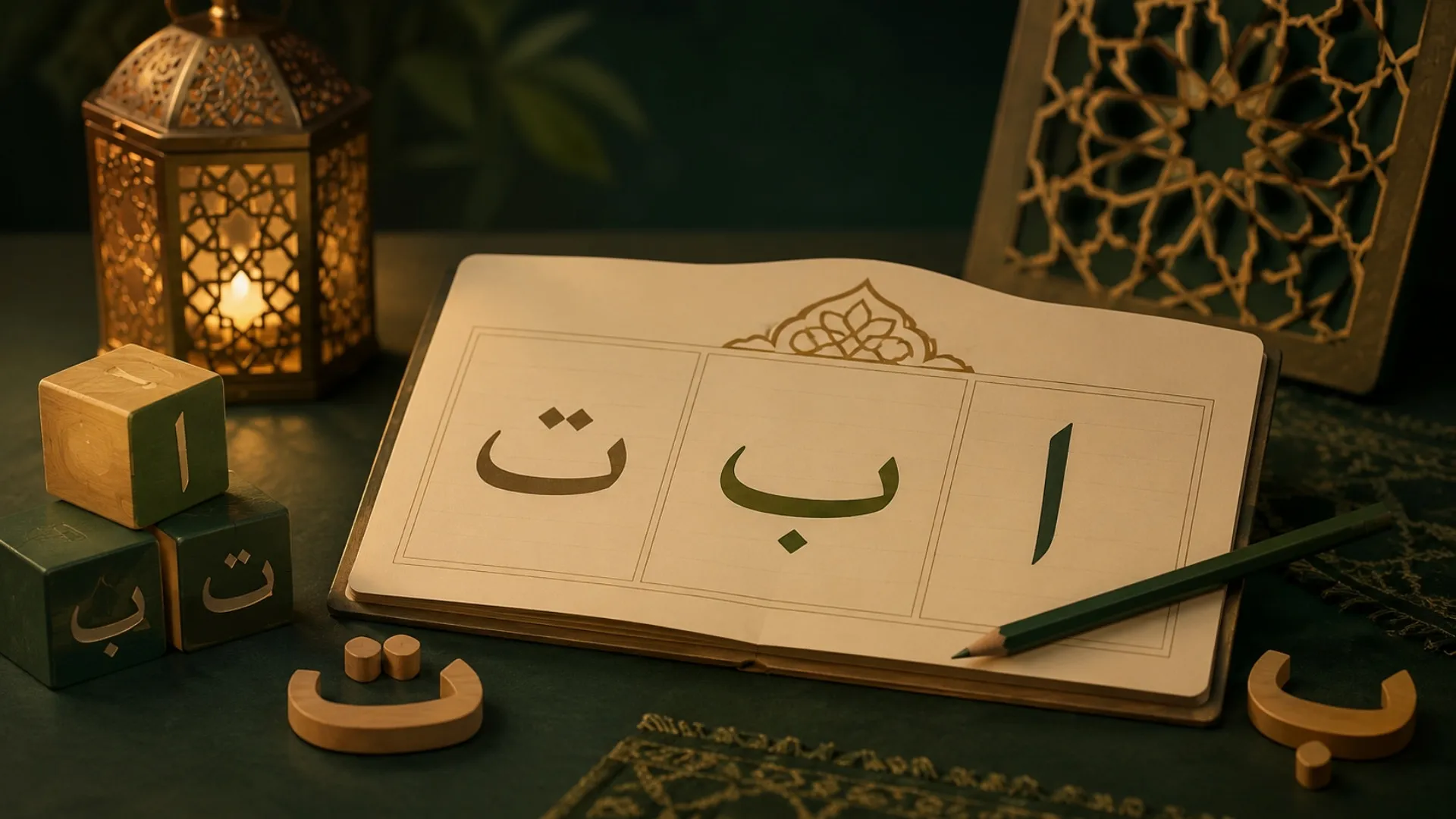
Is Arabic Foundations right for your child?
This program focuses on the building blocks of Arabic reading. It may suit your child if they are beginning to recognise letters, know some letter names but find their sounds difficult, or need help moving from individual letters to joined forms.
Starting with letters
Your child is becoming familiar with Arabic and needs patient guidance with letter recognition and pronunciation. Tell us what they already recognise so we can discuss an appropriate starting point.
Knows names, needs reading practice
Your child can name some letters but finds it difficult to identify them in a different order, recognise joined forms, or read them with short vowels.
Preparing for Quran reading
Your child needs a stronger foundation in Arabic letters and sounds before progressing with Quran reading. The teacher can help you discuss which program fits their present level.
What your child will work on
The Arabic Foundations program covers letter recognition and pronunciation, short vowels, basic joining and interactive activities. These are learning areas, rather than a fixed timetable: the teacher adapts the emphasis to the student.
Recognising letters
Identify Arabic letters and distinguish shapes that look similar. The goal is recognition beyond memorising the order of an alphabet chart.
Connecting letters and sounds
Listen to the teacher, practise the sound of a letter, and receive correction. Letter names and the sounds used in reading are related, but they are not the same skill.
Reading with short vowels
Practise how short vowel marks affect a letter’s sound. For example, بَ، بِ، بُ use the same letter with different short vowels.
Recognising joined forms
Become familiar with letters as they appear within words, then practise basic joining and early reading at an appropriate level.
From remembering a letter to reading it
A child may recognise ب on an alphabet chart but hesitate when a vowel mark is added or the letter appears inside a word. That is useful information about what to practise next—not a reason to rush ahead.
Recognise the letter · Notice the vowel · Practise with guidance
Illustrative learning example. Your child’s teacher determines the activities and progression appropriate to their level.
How online learning works
Lessons are live, so the teacher can hear your child, guide practice and respond to difficulties as they arise. Interactive activities support the letter and reading work. Parents receive feedback about progress and what needs further practice.
A study plan that fits the student
Lesson length, frequency and study arrangements are discussed according to the teacher, subject and student’s needs. Share your child’s current level, learning goals and preferred times on WhatsApp. We can then discuss a suitable arrangement rather than place every learner into the same schedule.
How parents can help between lessons
You do not need to turn home practice into another classroom. Ask the teacher which letters or reading skills to revisit, keep practice encouraging, and let the teacher know where your child hesitates. If you do not speak Arabic, explain that when discussing the program so you can ask what support will be suitable.
Read our guide to practising Arabic letters at homeArabic Foundations or Quran Recitation?
Arabic Foundations concentrates on letters, sounds and early reading. Quranic Recitation focuses on developing Quran reading with guided pronunciation practice. The programs can overlap at beginner level, so the right starting point depends on what your child can already read. You do not need to decide alone.
Explore online Quran Recitation classesQuestions parents ask
Does my child need to know the Arabic alphabet already?
Tell us which letters your child recognises and whether they can read any joined letters or short vowels. Arabic Foundations covers early letter and reading skills; we will discuss the appropriate starting point with you.
Is this a speaking course or a reading course?
This page describes Arabic Foundations for children: letter recognition, pronunciation and early reading. If your main goal is conversation or a different area of Arabic, tell us so we can discuss the relevant program.
What age is the program for?
The published program is for children ages 4 and above. Readiness and current skills also matter. Tell us about your child rather than relying on age alone to choose a starting level.
How long are lessons, and how often will my child study?
These arrangements are flexible and depend on the teacher, subject and student’s needs. We discuss suitable study arrangements with you individually.
How quickly will my child learn to read?
There is no single timeline that applies to every child. Starting skills, opportunities to practise and individual progress all matter. Discuss progress with the teacher instead of expecting a guaranteed completion date.
What should I include in my WhatsApp message?
Your child’s age, what they can currently recognise or read, your main learning goal, and preferred study times are useful starting points. You can also ask which teaching language and study format would suit your family.
Let’s find a suitable starting point
Tell us about your child’s Arabic learning so far. We will discuss the program and flexible study arrangements with you on WhatsApp.
Discuss my child’s learningWhatsApp opens with a message ready to edit. Press Send there so we receive your inquiry.