When Should a Child Start Quran Classes? 5 Signs They Are Ready
How to know when your child is truly ready to begin — and how to make their first experience of Quran learning positive, enjoyable, and lasting.
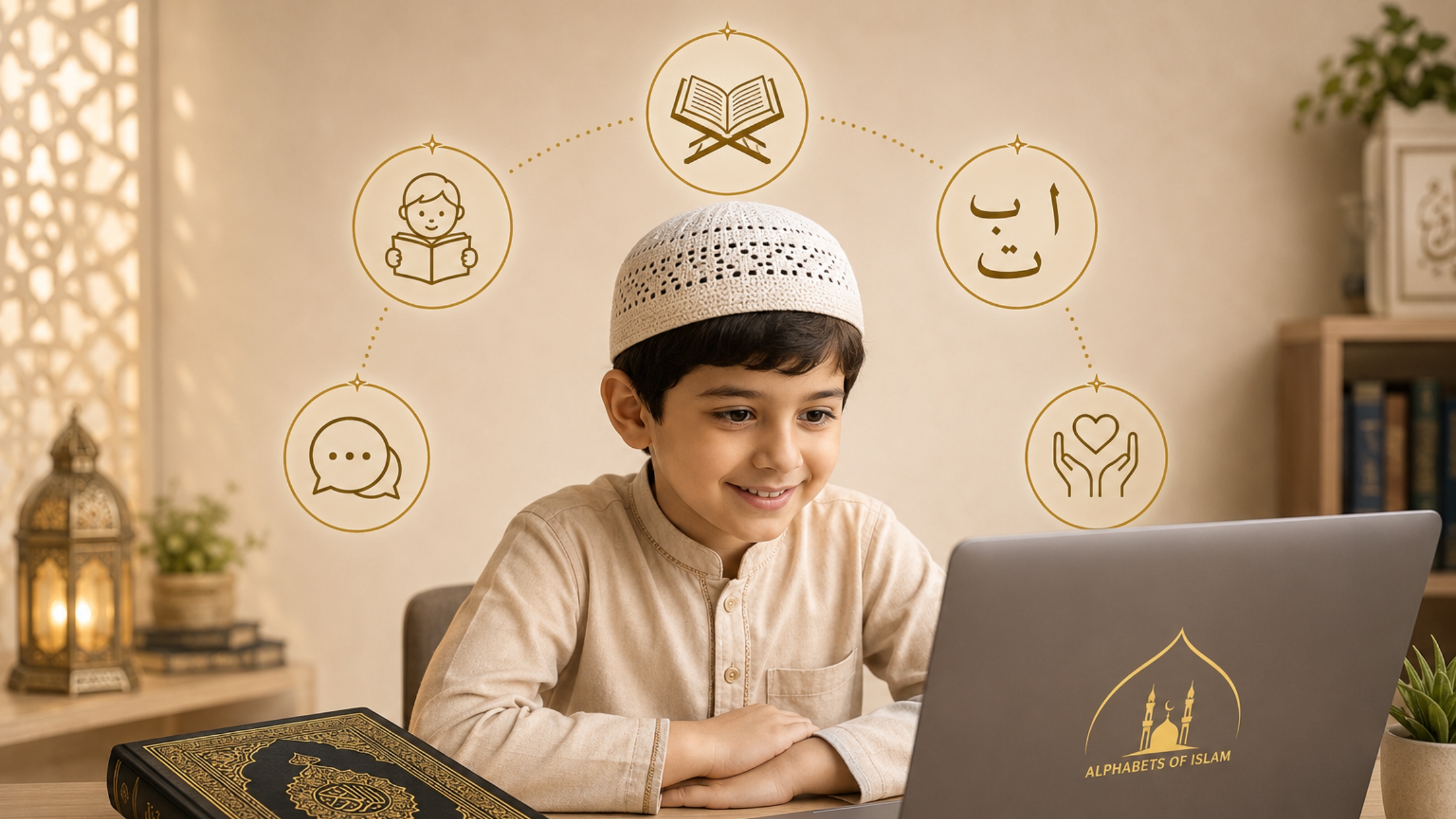
“Is my child too young to start Quran classes?”
It is one of the most common questions parents ask. Many worry about starting too early, while others fear they may be waiting too long. The truth is that there is no perfect age that suits every child. Children develop at different speeds, and readiness is often a better guide than age alone.
At Alphabets of Islam, we have worked with children from a wide range of ages, personalities, and learning backgrounds. Over time, we have noticed several common signs that often indicate when a child is ready to begin learning the Quran and benefit from structured lessons.
If you are wondering whether now is the right time, these five signs can help you decide.
Sign 1 — They Can Sit and Focus for 15–20 Minutes
Quran classes require a child to listen, repeat, interact with a teacher, and stay engaged throughout the lesson. If your child can sit through a story, a simple activity, or a short educational programme without constantly losing focus, they likely have the attention span needed to begin.
Most children develop this ability between the ages of 4 and 6, although some are ready earlier.
The goal is not perfect stillness. Young children are naturally active. What matters is whether they can stay engaged in an activity long enough to learn and respond.
Children who begin lessons before they can focus for even short periods often become frustrated and lose confidence. Readiness is less about age and more about the ability to participate consistently.
Practical test: Read a picture book with your child for 15 minutes. If they remain interested, ask questions, and follow along, they may be ready for Quran lessons.
Keep it light. The first sign of readiness is not about perfection — it is about presence. A child who can stay with you for 15 minutes is already capable of beginning.
Sign 2 — They Show Curiosity About the Quran or Prayer
Children are naturally curious about what they see at home. If they watch family members pray, listen to Quran recitation, or attend the masjid, they often begin asking questions.
They may ask:
- What do these words mean?
- Why do we pray?
- Can I read the Quran too?
- How do I learn Arabic letters?
This curiosity is one of the strongest signs of readiness. A child who wants to learn usually progresses faster and enjoys the journey more than a child who feels forced into it.
If your child has not yet shown this interest, do not worry. Curiosity can be nurtured naturally by playing Quran recitation at home, including children in dua, reading Islamic stories together, and talking positively about learning the Quran. Interest often grows through exposure and encouragement.
Curiosity is a gift — nurture it. A child who asks “Can I read the Quran too?” is already halfway there. Your role is simply to open the door at the right moment.
Sign 3 — They Can Recognise Letters in Their Native Language
A child who has started recognising letters in English, Arabic, German, or another language has already developed an important learning skill. They understand that letters represent sounds and that those sounds form words. This foundation transfers directly to learning the Arabic alphabet.
Your child does not need to be fluent in reading before starting Quran classes. However, familiarity with letters and sounds can make the learning process smoother and more enjoyable. Many children who are beginning to read in one language adapt quickly when learning Arabic letters.
Languages share a foundation. A child learning to read English is already building the mental pathways that make Arabic letter recognition far easier than most parents expect.
Sign 4 — They Can Communicate Clearly With an Adult
Whether lessons are online or in person, children need to interact with their teacher. This includes following instructions, answering simple questions, asking for help when needed, and responding during activities and exercises.
Children who can hold a simple conversation and understand basic directions are usually ready for the teacher-student relationship that Quran learning involves.
A note about shy children: Shyness is not a barrier to success. Many children start quietly and become much more confident after building trust with a patient and supportive teacher.
On shy children: Some of our most dedicated students began as the quietest in the room. Trust and routine work quietly — within a few sessions, most children open up in ways that surprise their parents.
Sign 5 — You as a Parent Are Ready to Support Them
This may be the most important sign of all. A child’s experience of Quran learning is strongly influenced by what happens outside the lesson. Children notice how parents speak about learning, how consistent routines are maintained, and whether progress is celebrated.
Parental support does not require fluency in Arabic or advanced Islamic knowledge. It simply means encouraging attendance, maintaining a consistent schedule, asking about lessons, celebrating progress, and creating a positive attitude toward learning.
When Quran learning is treated as something meaningful at home, children are far more likely to remain motivated and engaged.
The home sets the tone. A teacher can only do so much in 30 minutes. What surrounds those 30 minutes — the attitude at home, the small daily reminders — is what turns a lesson into a habit.
What Age Is Best to Start Quran Classes?
We welcome students from age four and above, as well as adult learners who are beginning later in life. Among children, the most common starting age is between five and seven years old. However, readiness matters far more than a specific birthday. Once your child is reading comfortably, the natural next step is learning Tajweed.
Rather than focusing on age alone, look at the five signs discussed above. They often provide a much more accurate picture of whether a child is prepared to start.
Common Concerns Parents Have Before Starting
Many parents hesitate because they worry about challenges their child may face. Here are some of the most common concerns:
“My child is very shy.”
Shy children often do extremely well once they become comfortable with their teacher. A calm and supportive learning environment makes a significant difference.
“My child struggles to focus.”
Short, engaging lessons are often enough to gradually improve attention and build learning habits over time.
“My child does not know Arabic.”
This is completely normal. Many children begin Quran classes without any prior Arabic knowledge and learn step by step. Our Arabic Foundations programme is designed for exactly this starting point.
“Have we started too late?”
Children, teenagers, and adults can all learn the Quran successfully. Progress depends far more on consistency than on starting age.
How to Make the First Quran Lesson a Positive Experience
The first lesson often shapes a child’s attitude toward Quran learning. To make it enjoyable: talk about the lesson positively, present it as an exciting opportunity rather than a test, choose a time when your child is rested and comfortable, allow them to ask questions freely, celebrate small achievements after the lesson, and be patient during the first few sessions.
The goal of the early lessons is not rapid progress. It is to build confidence, trust, and enthusiasm for learning.
Frequently Asked Questions
Can a 4-year-old start Quran classes?
Yes. Many children begin learning Arabic letters and short surahs at age four if they can focus for short periods and engage with a teacher.
What is the best age to start Quran lessons?
Most children begin successfully between ages five and seven, but readiness is more important than age.
How long should a beginner’s Quran lesson be?
For most young learners, 20–30 minutes is enough to maintain focus and enjoyment.
Does my child need to know Arabic before starting?
No. Many children learn Arabic letters and Quran reading skills from the very beginning with the guidance of a teacher.
More Questions Parents Ask
How do you teach a 4-year-old the Quran?
Start with sounds, not pressure. Short sessions (20–30 minutes is plenty), lots of repetition and a teacher who listens and smiles work best at this age. Letters and their sounds come first, then short words, then the first surahs. In our live Quran recitation classes, open to learners aged 4 and up, the teacher first listens to your child read so the starting point matches what they already know. Lessons can be private 1:1 or in a group.
What should I teach a 2-year-old about Islam?
At two, think habits rather than lessons: saying Bismillah before eating, a short dua at bedtime, and letting your child hear calm Quran recitation at home. No formal teaching is needed yet. When your child is around four and can sit and listen for a short time, live lessons can begin. A gentle first step is our Arabic alphabet classes for kids.
Can a child memorise before they can read?
Many children pick up short surahs by listening and repeating long before they can read the letters, and that is lovely to do at home. Careful, structured memorisation is easier once your child recognises the letters and reads them correctly, because they then memorise the right pronunciation from the start. Our Quran recitation programme builds from the Arabic letters to fluent reading and includes surah memorisation as your child progresses, and some of our teachers are Hafiz of the Quran themselves.
Is online learning good for young children?
It can be, when lessons are live and the teacher interacts with the child, not when a child watches recorded videos alone. A live teacher hears a mistake and corrects it on the spot. Parents are welcome to sit nearby during lessons to see what is happening and how their child is doing. If a lesson can’t happen, you can reschedule with 12 hours’ notice at no charge.
How do I know which class suits my child?
Tell us your child’s age, what they can read now and what you hope for. The teacher assesses your child and places them at the appropriate level with a suitable learning plan. All lessons are paid and scheduled after enrollment; message us on WhatsApp for current pricing and scheduling.
Not sure whether your child is ready yet? Send us a message and we will happily advise you, recommend the most suitable starting point, and help you find the right teacher for your family.
WhatsApp Us Enroll NowExplore our live online Quran recitation classes and get started.