What Is Tajweed in the Quran? Why Proper Recitation Matters
A clear, honest guide for parents and adult learners — explaining what Tajweed actually is, why it matters, and how proper Quran recitation is preserved from generation to generation.
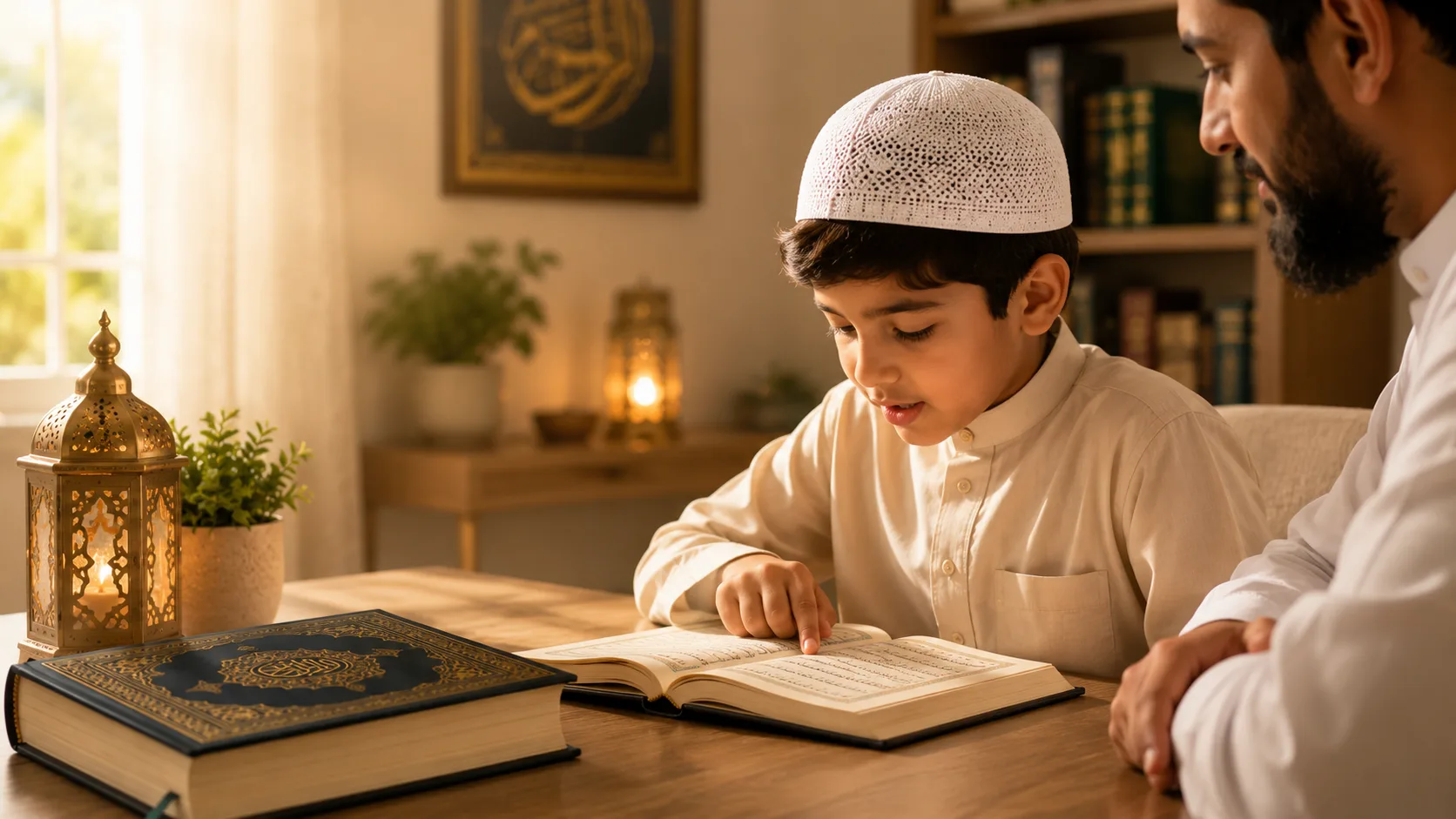
If you have ever heard someone recite the Quran beautifully — with measured rhythm, precise pronunciation, and a natural flow — you were hearing Tajweed in action.
But Tajweed is not simply about making the Quran sound beautiful.
It is a science of Quran recitation that helps preserve the words of Allah exactly as they were revealed and transmitted. It protects pronunciation, preserves meaning, and teaches Muslims how to recite the Quran with care and respect.
At Alphabets of Islam, we regularly work with children, teenagers, and adults who are learning Tajweed for the first time. One of the most common misconceptions we encounter is that Tajweed is only about improving the sound of recitation. In reality, it plays a much deeper role in preserving accurate Quran recitation.
In this guide, we will explain what Tajweed is, why it matters, when students should begin learning it, and what to look for in a qualified Tajweed teacher.
What Does “Tajweed” Actually Mean?
The word Tajweed (تجويد) comes from an Arabic root meaning to improve, to make better, or to do something well.
In the context of Quran recitation, Tajweed refers to the rules that govern how each letter of the Quran should be pronounced. These rules cover:
- The correct articulation point of each letter (Makharij)
- The characteristics of letters (Sifaat)
- Elongation rules (Madd)
- Nasal sounds (Ghunna)
- Rules of stopping and starting (Waqf and Ibtida)
- The interaction between letters when reciting
The Prophet Muhammad ﷺ received the Quran in a specific manner of recitation, and that recitation has been transmitted from teacher to student through generations. Tajweed helps preserve that method of recitation.
Allah says in the Quran: “And recite the Quran with measured recitation.” (Quran 73:4) — The word used is Tartil: slow, careful, and measured. Tajweed is how Muslims fulfil this command.
Why Does Tajweed Matter?
Tajweed matters for three important reasons.
1. Correct Pronunciation
Arabic contains sounds that do not exist in many other languages. Letters such as ع (Ayn), ح (Haa), غ (Ghayn), and ض (Dhad) must be pronounced from specific points in the throat, tongue, and mouth.
When these sounds are pronounced incorrectly, the word may change completely. In some situations, a single incorrectly pronounced letter can alter the meaning of a verse. Tajweed serves as a safeguard against these mistakes.
2. Preservation of Meaning
The Quran is the exact word of Allah. Every letter, vowel, pause, and elongation carries significance. Tajweed rules were preserved to help ensure that recitation remains faithful to the original revelation.
3. Respect and Reverence
Reciting the Quran is an act of worship. Just as Muslims prepare themselves physically and spiritually before prayer, they should also strive to recite the Quran with care and respect. Learning Tajweed is part of giving the Quran the honour it deserves.
A note from our teachers: We regularly work with students who have been reciting for years but developed small pronunciation habits that went uncorrected. The earlier Tajweed is introduced, the easier it is to build strong, lasting foundations.
Reading the Quran vs Reading With Tajweed
Many beginners can learn to recognise Arabic letters and read Quranic words accurately. Tajweed goes a step further — it teaches how each letter should sound, how long vowels extend, where to pause, and how sounds interact.
Reading helps you recognise the words. Tajweed helps you recite them correctly.
Students who learn Tajweed often develop stronger confidence, better pronunciation, and a deeper connection with Quran recitation.
The Most Common Tajweed Rules Beginners Learn
Tajweed contains many rules, but most students begin with a core group that appears frequently throughout the Quran.
Noon Sakinah and Tanween
These rules govern the pronunciation of the “n” sound when it appears without a vowel or at the end of a word. Students learn Izhar, Idgham, Iqlab, and Ikhfa.
Meem Sakinah
These rules apply to the letter Meem when it appears without a vowel and determine how it interacts with the letters that follow.
Madd (Elongation)
Madd rules determine how long certain sounds should be stretched — students learn when to extend sounds by 2, 4, or 6 counts.
Qalqalah
Qalqalah creates a slight echoing or bouncing sound on specific letters — ق ط ب ج د — when they occur in particular situations.
Heavy and Light Letters
Students learn when letters should be pronounced with heaviness (Tafkheem) and when they should be pronounced lightly (Tarqeeq). This is especially important for ر (Ra) and ل (Lam).
Waqf (Stopping)
Waqf teaches students where they may stop, where it is preferable to stop, and where stopping may affect meaning — preserving the message of the Quran.
Important: Tajweed cannot be mastered from books alone. Students need to hear correct recitation, practise consistently, and receive correction from a qualified teacher. This is how the Quran has been transmitted for over 1,400 years.
What Challenges Arise Without Tajweed Training?
Many people learn to read Quranic Arabic without studying Tajweed. They may recognise the letters and move through the text, but common issues develop: heavy letters become light, elongations are shortened or omitted, pauses occur in unsuitable places, letters merge incorrectly, and the natural rhythm of recitation is lost.
Perhaps the biggest challenge is that incorrect habits become very difficult to change later. For this reason, it is usually easier to learn correctly from the beginning.
At What Age Should Tajweed Be Introduced?
The foundations of correct pronunciation should begin from the first Quran lesson. Young children are often very capable of learning proper sounds naturally through repetition and listening.
More detailed Tajweed rules are typically introduced once a child becomes comfortable reading the Quran and can maintain consistent focus. Many students begin formal Tajweed between the ages of 7 and 9, although readiness matters more than age. Adults can begin at any age.
Readiness over age. We have seen 6-year-olds take to Tajweed naturally, and adults in their 50s master the rules with patience and consistency. The right teacher and the right structure make all the difference.
What to Look for in a Tajweed Teacher
Not everyone who recites beautifully is equipped to teach Tajweed effectively. A good Tajweed teacher should have recognised qualifications — ideally an Ijazah in Quran recitation — a corrective ear, a structured teaching method with gradual rule introduction, and the patience to support students through consistent correction.
At Alphabets of Islam, all our Tajweed teachers hold recognised qualifications and are experienced in teaching both children and adults. Every lesson includes structured correction — because that is how real progress happens.
Frequently Asked Questions
Is Tajweed mandatory when reading the Quran?
Muslims should strive to recite the Quran correctly according to their ability. Learning Tajweed helps preserve accurate pronunciation and reduces mistakes during recitation.
Can I read the Quran without learning Tajweed?
A person can read the Quran while learning, but studying Tajweed helps ensure that words are pronounced correctly and that meanings are preserved.
How long does it take to learn Tajweed?
Many students learn the fundamentals within a few months. Mastery develops over time through regular recitation, listening, and correction by qualified teachers.
Should children learn Tajweed from the beginning?
Children should learn correct pronunciation from their earliest Quran lessons. Detailed Tajweed rules can then be introduced gradually as they progress.
Can you learn Tajweed by yourself?
You can learn the theory from books and videos, and that is a good start. The difficulty is hearing yourself: most Tajweed mistakes sound correct to the person making them. That is why a teacher who listens to you recite makes such a difference. In our live Tajweed classes you recite, the teacher points to a specific correction, and you repeat it and practise it again in the passage. Our Tajweed teachers hold Ijazah.
Which Tajweed rule should I learn first?
Most teachers begin with how each letter is pronounced (the articulation points) and the characteristics of the letters, then move on to the rules that apply as you recite. Your teacher decides where to start after listening to your reading.
Do I need to read the Quran fluently before Tajweed classes?
Our Tajweed Mastery classes suit learners who can already read the Quran. If you are still learning to read, begin with Quranic Recitation, which starts from the Arabic letters and introduces basic Tajweed rules along the way.
At what age can children start learning Tajweed?
Our programmes accept learners aged 4 and up. Correct pronunciation is taught from the first lesson, and the detailed rules come gradually once a child reads comfortably.
Does learning Tajweed online really work?
Tajweed is about listening, so a live video lesson works well when the teacher can hear you clearly. You recite, the teacher listens for specific pronunciation and rule errors, shows the correction, and you practise it again. It is individual feedback on your own reading, not a recording to watch alone.
Learn Tajweed the Right Way
Whether you are helping your child begin Quran recitation or improving your own reading, strong Tajweed foundations make a lasting difference. Our qualified teachers guide students through every stage — with structured lessons, personalised correction, and consistent support.
Explore our live online Tajweed classes and get started.